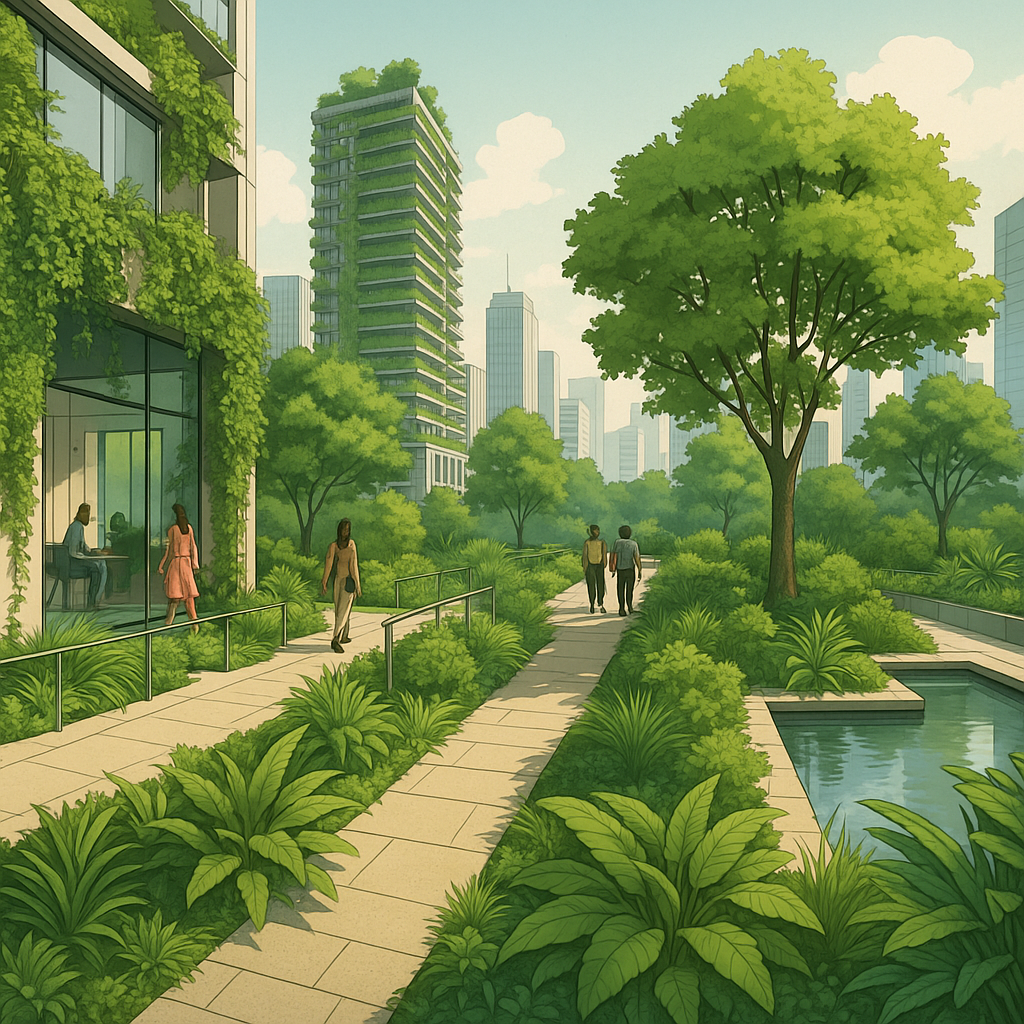
The Rise of Biophilic Design in Cities – Nature’s Return to the City
In the face of rapid urbanisation and the increasing disconnect between people and nature, biophilic design has emerged as a powerful trend in urban planning. Derived from the Greek words “bio” (life) and “philia” (love), biophilic design seeks to reconnect humans with the natural world through architecture and landscaping. As cities expand, incorporating nature into urban environments is no longer just an aesthetic choice but a necessity for enhancing well-being and promoting sustainability.
Why Biophilic Design Matters
Urban areas are often characterised by concrete landscapes, limited green spaces, and high levels of pollution. This disconnect from nature can negatively impact physical and mental health, leading to increased stress, lower productivity, and reduced quality of life. Biophilic design aims to counter these challenges by integrating natural elements into buildings, public spaces, and community areas. From rooftop gardens to green walls, biophilic elements are designed to enhance air quality, provide aesthetic pleasure, and foster a sense of community.
Key Features of Biophilic Urban Design
Biophilic design goes beyond simple landscaping, incorporating nature at every level of urban planning. Some common features include:
- Green Roofs and Vertical Gardens: These structures reduce urban heat, improve air quality, and create habitats for wildlife.
- Natural Light Integration: Maximising daylight through large windows and skylights promotes health and reduces energy consumption.
- Water Features: Incorporating fountains, rain gardens, and reflective pools helps regulate temperatures and promotes relaxation.
- Native Plant Landscaping: Using local flora not only supports biodiversity but also reduces maintenance and water use.
- Community Gardens: These shared spaces encourage social interaction and provide a local source of fresh produce.
- Indoor Plant Walls: Bringing greenery into interiors reduces stress and improves indoor air quality.
Examples of Biophilic Design in Action
Urban planners and architects worldwide are embracing biophilic principles:
- Moss Wall at One Central Park, Sydney: A vertical garden that spans the entire facade, enhancing air quality and cooling the building.
- Singapore’s Gardens by the Bay: Features massive tree-like structures that support solar panels and host diverse plant species.
- New York’s High Line: A transformed railway line turned urban park, blending native plants with public art.
- The Green Spine, Melbourne: A proposed skyscraper covered in greenery, aiming to become the world’s tallest vertical garden.
- Bosco Verticale, Milan: Two residential towers adorned with over 900 trees and 20,000 plants, promoting biodiversity in the city centre.
Health and Wellness Benefits
Studies have shown that exposure to natural elements in urban settings can significantly reduce stress, lower blood pressure, and improve mental well-being. Biophilic environments foster creativity, enhance focus, and create a calming atmosphere, making them particularly beneficial for workplaces and residential areas. Moreover, green infrastructure helps manage stormwater, reduce heat islands, and increase property values.
Biophilic Design and Climate Resilience
Beyond health benefits, biophilic design plays a vital role in making cities more resilient to climate change. By incorporating natural elements, cities can mitigate the effects of urban heat, manage flood risks, and enhance biodiversity. Green corridors also help wildlife migrate through urban environments, while green roofs provide insulation, reducing the need for heating and cooling.
Community Engagement Through Nature
Biophilic design encourages community involvement by creating inviting green spaces that foster social interaction. Whether through communal gardens, shaded plazas, or nature trails, these areas become hubs of activity and relaxation. Planners are increasingly involving local communities in designing and maintaining these spaces, fostering a sense of ownership and responsibility.
The Future of Urban Living
As more cities recognise the importance of integrating nature into urban spaces, biophilic design is set to become a cornerstone of sustainable city planning. Future developments will likely prioritise biodiversity, community well-being, and climate adaptation through nature-centric designs. Governments and urban developers must work together to create policies that support biophilic initiatives, ensuring that cities remain livable and resilient as they grow.