Tag Archives: AI in Healthcare

AI Tools Revolutionising Chiropractic Care

Discover how AIenhanced chiropractic tools are transforming pain management and spinal health, offering personalised, precise, and effective treatments.
Have you ever wondered how artificial intelligence is changing the landscape of healthcare, particularly in chiropractic care? AIenhanced chiropractic tools are emerging as powerful allies in managing pain and improving spinal health. These innovations not only make treatments more effective but also empower patients to take charge of their wellness.

The Rise of AI in Chiropractic Care

AI’s integration into chiropractic care is more than just a tech trend—it’s a revolution. By using sophisticated algorithms, AI tools can analyse data from patient histories, treatment outcomes, and even realtime feedback. This information is invaluable in creating personalised care plans that cater perfectly to individual needs.

These tools help chiropractors identify patterns and predict potential issues before they become severe. This proactive approach is crucial in managing chronic back pain, neck strains, and other musculoskeletal disorders. Whether it’s through wearable devices or sophisticated software, AI is transforming how chiropractors diagnose, treat, and monitor their patients.

Precision and Personalisation in Treatment

AI brings an unprecedented level of precision and personalisation to chiropractic care. For instance, AI diagnostics tools can measure spinal movements in real time, providing detailed analytics that were previously unimaginable. This means chiropractors can tailor treatments more precisely, adjusting care plans as needed based on actual data.

Moreover, AI can forecast how a patient might respond to different treatment modalities, enabling practitioners to finetune interventions for optimal results. This level of personalisation not only enhances the effectiveness of care but also builds trust between patients and practitioners.

Improving Patient Engagement and Outcomes

AI tools are not just for practitioners—they significantly improve patient engagement as well. Mobile apps and digital platforms allow patients to track their progress, access educational resources, and communicate seamlessly with their healthcare providers. This empowers individuals to make informed decisions about their health and wellness.

Furthermore, by continuously monitoring patient progress, AI tools can provide realtime feedback and suggestions, encouraging patients to adhere to prescribed exercises and routines. Such engagement is crucial in ensuring longterm success and satisfaction with chiropractic care.

Integration with Other Health Technologies

AIenhanced chiropractic tools work synergistically with other health technologies. For instance, integrating AI with wearable devices offers comprehensive insights into patients’ overall health. Data from heart rate monitors, activity trackers, and sleep trackers can be analysed alongside chiropractic data to provide a holistic view of a patient’s condition.

Additionally, AI tools can be part of a broader digital health ecosystem, connecting with electronic health records and telehealth services. This integration ensures continuity of care, providing chiropractors and other healthcare providers with a complete picture of a patient’s health status.

The Future of AI in Chiropractic Care

As AI continues to advance, its impact on chiropractic care will only grow. Innovations in machine learning could lead to even more sophisticated predictive analytics, further refining treatment protocols. Moreover, with the advent of augmented reality and virtual reality tools, chiropractors might soon offer immersive, guided exercises to patients, enabling them to practice from the comfort of their homes.

These technologies also hold the promise of making healthcare more accessible, reducing geographical barriers and costs. By leveraging AI, chiropractic care is on the brink of becoming more efficient, affordable, and personalised than ever before.

Top Tips:

1. Consider using AIenhanced tools for a more tailored chiropractic experience.
2. Engage actively with digital platforms to track your progress and communicate with your chiropractor.
3. Embrace AIpowered wearables for comprehensive health insights.
4. Stay informed about new AI innovations in healthcare to maximise your treatment benefits.
5. Collaborate with healthcare providers to integrate chiropractic care with other health technologies.

FAQ:

Q: How does AI enhance chiropractic care?
A: AI tools provide personalised treatment plans by analysing patient data and predicting outcomes, improving precision and effectiveness.

Q: Are AI tools safe in chiropractic care?
A: Yes, they are designed to enhance rather than replace clinical judgment, ensuring safe and effective practices.

Q: Can AI tools be used at home?
A: Certain AIpowered apps and wearables can be used at home, empowering patients with selfcare tools and realtime feedback.

Q: Do AI tools replace chiropractors?
A: No, they are designed to assist and enhance chiropractic practices, providing datadriven insights for better care.

In conclusion, AIenhanced chiropractic tools are reshaping the landscape of pain management and spinal health, paving the way for a more personalised, precise, and patientcentric approach. As technology continues to evolve, these tools will further transform how we understand and care for our bodies. What are your thoughts on integrating AI into healthcare? Would you consider using AIpowered tools for your chiropractic needs? Share your thoughts here.

For more, see this Wikipedia article on future health tech.

AI-Driven Health Diagnostics Explained

Discover how AI is revolutionising health diagnostics, providing quicker, accurate results for better healthcare outcomes. Learn about the latest advancements!

Introduction

Have you ever pondered how artificial intelligence could revolutionise the way we diagnose illnesses? AIdriven health diagnostics is rapidly transforming the landscape of healthcare, offering quicker, more accurate, and sometimes lifesaving results. This article delves into the intricacies of AI in healthcare and how it’s reshaping the way medical professionals approach diagnostics, potentially improving outcomes for everyone.

Understanding AIPowered Diagnostics

Artificial intelligence in health diagnostics primarily involves using algorithms and machine learning to analyse complex medical data. This allows healthcare providers to draw meaningful insights that may not have been apparent through traditional methods. From analysing imaging results to predicting patient outcomes, AI is becoming an invaluable tool in modern medicine.

One area where AI is making significant strides is in radiology. By training AI systems to recognise patterns within medical images, such as Xrays or MRIs, doctors can identify diseases like cancer more swiftly and with higher accuracy. This not only speeds up the diagnostic process but also improves the potential for early treatment.

Another fascinating application is AI’s ability to process data from wearable health devices. These gadgets collect vital health metrics and, with AI’s analytical capabilities, can provide insights into a person’s overall health status. As these technologies continue to evolve, they promise to become integral in personal and preventative healthcare.

AI’s role isn’t limited to diagnostics alone. It’s also instrumental in field research, uncovering correlations and patterns that could lead to groundbreaking medical discoveries. As these algorithms become more sophisticated, they’re poised to unlock new understandings of diseases and their treatment.

Advantages of AI in Health Diagnostics

One of the most compelling benefits of AI in health diagnostics is accuracy. Unlike human practitioners who might miss subtle signs due to fatigue or oversight, AI systems constantly learn from vast datasets, enhancing their precision over time. This means more reliable diagnoses and fewer chances for error.

Speed is another factor where AI shines. Traditional diagnostic methods can be timeconsuming, but AI can process information in a fraction of the time, allowing for quicker treatment decisions. This is particularly crucial in emergency medicine, where every second counts.

Costeffectiveness is also a significant consideration. AI can reduce the need for multiple tests by providing a more accurate initial diagnosis. This not only saves money for healthcare systems but also minimises the stress and inconvenience for patients.

Importantly, AI democratises healthcare access. Through telemedicine supported by AI, more patients can receive quality healthcare, regardless of their location. This is particularly beneficial in rural or underserved areas, potentially reducing health disparities.

Challenges and Considerations

While the benefits are clear, there are challenges to integrating AI in health diagnostics. Data privacy is a major concern. With sensitive health information being processed by AI systems, ensuring that this data is protected against breaches is crucial.

Moreover, the technology’s dependency on comprehensive datasets can be a doubleedged sword. Incomplete or biased datasets can lead to inaccurate diagnostics, which could have detrimental effects on patient care. Ensuring AI systems are trained on diverse and representative datasets is essential to avoid these pitfalls.

Another challenge lies in the healthcare professionals’ adaptation to these new technologies. Training and education are vital for clinicians to effectively integrate AI into their practice while maintaining the human touch that is so important in patient care.

Lastly, ethical considerations regarding the decisionmaking capabilities of AI should not be overlooked. Balancing AI’s role with human oversight is crucial to ensure these technologies amplify rather than override human judgment.

AI and the Future of Healthcare

The future of healthcare with AI is indeed promising. With ongoing advancements, AI is expected to become even more integral in predictive analytics, helping prevent diseases before they manifest. Predictive models powered by AI could revolutionise proactive healthcare, leading to longer, healthier lives.

Additionally, AIdriven innovations in drug discovery and development hold significant potential. By identifying potential drug candidates more efficiently, AI can speed up the process, bringing lifesaving medications to market quicker than traditional methods allow.

As AI continues to advance, collaboration between technology experts and healthcare professionals will be essential to ensure that these tools are as effective and safe as possible. This synergy will be integral in shaping a future where AI is a trusted partner in healthcare.

Ultimately, AI’s integration into health diagnostics heralds a new era of medicine. Though challenges remain, the potential benefits for efficiency, accuracy, and accessibility make it an exciting frontier in healthcare innovation.

Top Tips:

Stay informed about AI advancements in healthcare.
Encourage open dialogue about AI with your healthcare provider.
Advocate for inclusive data practices to minimise biases.
Balance AI benefits with the necessity of human expertise.
Consider privacy implications when engaging with AI health tools.

FAQ:

What types of diagnostics can AI help with? AI is being used in imaging, pathology, genomics, and wearable health monitoring, among other areas. For more, see this Wikipedia article on visionary ideas.

How does AI improve diagnostic accuracy? AI analyses vast amounts of data to recognise patterns that might be missed by humans, improving diagnostic precision.

Are AI diagnostic tools widely available? Availability is increasing, especially in developed regions, but access may still be limited due to cost and infrastructure requirements.

What about data security in AI diagnostics? Ensuring data privacy is a top priority, and robust systems are in place to protect sensitive information.

Can AI replace doctors in diagnostics? No, AI is designed to support, not replace, doctors by enhancing their ability to diagnose accurately and efficiently.

Conclusion

The integration of AI in health diagnostics represents an exciting evolution in the healthcare industry. While there are challenges, the potential benefits for enhanced accuracy, speed, and accessibility are immense. Have you experienced any AIdriven healthcare services? How do you see the role of AI in your personal health journey? We invite you to share your thoughts and experiences as technology continues to bridge gaps in healthcare. If you’re curious to explore more about how modern technology affects our daily lives, check out people finder services that highlight the growing role of tech in connectivity.

AI Diagnostics: Pioneering Health Insights

Discover how AIpowered diagnostics are transforming healthcare with faster, more accurate insights for better health outcomes.

Introduction to AIPowered Health Diagnostics

Artificial intelligence is revolutionizing the way we approach healthcare, particularly through AIpowered health diagnostics. These cuttingedge technologies are providing faster, more accurate insights into our health, paving the way for early interventions and better outcomes. In this article, we’ll explore how AI diagnostics is transforming the healthcare landscape.

From Symptoms to Solutions: The Power of AI

AI diagnostics tools have the remarkable ability to process vast amounts of data quickly and accurately. With AI, health professionals can detect patterns and anomalies in medical data that might take humans much longer to identify. This leads to earlier detection of conditions, allowing for more timely intervention.

These technologies can analyze everything from imaging data, such as Xrays and MRIs, to genetic information. By leveraging machine learning algorithms, AI can predict the likelihood of certain conditions, giving doctors valuable information to guide treatment decisions.

Personalized Healthcare Through AI Insights

One of the greatest benefits of AIpowered diagnostics is the ability to offer personalized healthcare solutions. By analyzing individual health data, AI can tailor recommendations and treatments to suit specific needs. This personalized approach increases the effectiveness of treatments and minimizes potential side effects.

Moreover, AI can continuously learn and adapt, improving its accuracy over time. This means that as more data becomes available, AI diagnostics tools can offer increasingly precise insights, leading to better health management.

Challenges and Ethical Considerations

While AIpowered diagnostics offer numerous benefits, there are also challenges and ethical considerations to address. Data privacy is a significant concern, as AI systems require access to personal health information. Ensuring that this data is protected is crucial to maintain patient confidentiality.

Additionally, the integration of AI in healthcare must be approached with caution, ensuring that human oversight is maintained. AI should support, not replace, medical professionals—providing them with tools to enhance their work rather than diminish their role.

FAQ: Navigating AI Diagnostics

Q: How reliable are AI diagnostics?
A: AI diagnostics are highly reliable, often matching or exceeding human accuracy. However, they are best used in conjunction with human expertise for the best outcomes.

Q: Can AI replace doctors?
A: No, AI is designed to assist doctors, providing them with valuable insights that enhance decisionmaking but not replacing their expertise.

Q: Is my data safe with AI diagnostic tools?
A: Most AI tools adhere to strict data privacy regulations, ensuring that personal health information is securely stored and used only for diagnostic purposes.

Conclusion: Embracing the Future of Healthcare

AIpowered diagnostics are already transforming healthcare, offering significant advancements in precision, speed, and personalized care. As these technologies continue to evolve, they promise to make healthcare more efficient and accessible to all. If you’re interested in learning more about how technology impacts wellness, explore our complete guide on finding healthcare resources through our people finder service. Embrace the future of health diagnostics and stay informed for a healthier tomorrow.

Traditional Wellness vs. AI Wellness

AI Wellness
#image_title

Why Compare Traditional and AI-Enhanced Wellness?

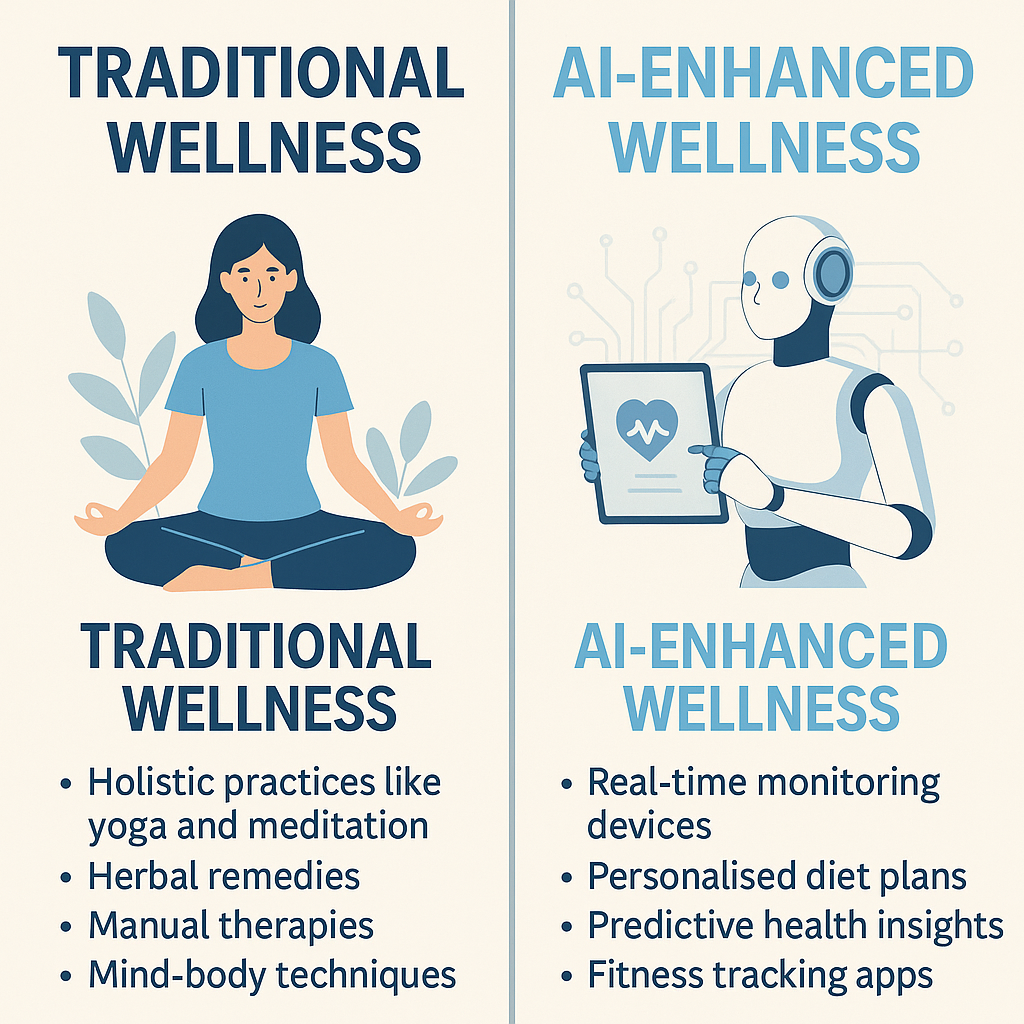
Wellness practices have evolved significantly over the decades. While traditional methods focus on holistic, often natural approaches, AI Wellness or AI-enhanced wellness utilises cutting-edge technology to personalise and optimise health. Comparing these methods helps us understand their benefits and challenges, guiding us towards making informed choices in our wellness journeys.


What Is Traditional Wellness?

Traditional wellness practices typically encompass holistic methods rooted in ancient cultures and practices. They include approaches like:

  • Yoga and Meditation: Enhancing mental and physical well-being through mindfulness and movement.
  • Herbal Remedies: Using natural plants and herbs to support health.
  • Acupuncture and Traditional Chinese Medicine (TCM): Balancing the body’s energy for improved wellness.
  • Manual Therapies: Including massage, chiropractic adjustments, and reflexology.
  • Mind-Body Techniques: Practices like tai chi and breathing exercises that foster relaxation.

The core philosophy of traditional wellness is balance—both within the body and between body and mind. These practices focus on natural healing, prevention, and lifestyle harmony.


What Is AI-Enhanced Wellness?

In contrast, AI-enhanced wellness harnesses technology to deliver personalised health solutions. Key aspects include:

  • Real-Time Monitoring: Wearable devices track heart rate, sleep patterns, and stress levels.
  • Personalised Diet Plans: AI analyses eating habits and provides tailored nutrition advice.
  • Fitness Tracking: Apps monitor exercise performance, suggest improvements, and set goals.
  • Predictive Health Insights: Algorithms analyse data to predict potential health issues before symptoms arise.
  • Smart Therapy Recommendations: AI-driven apps suggest mindfulness or stress management techniques based on real-time data.

The appeal of AI-enhanced wellness lies in its precision. By collecting and analysing data, AI offers insights that are specifically tailored to an individual’s lifestyle, health status, and goals.


Head-to-Head Comparison: Traditional vs. AI-Enhanced Wellness

AspectTraditional WellnessAI-Enhanced Wellness
PersonalisationCustomisation through holistic assessmentsUses real-time data for precision
AccessibilityRequires practitioners or in-person sessionsAccessible through apps and wearable devices
Data IntegrationLimited, often anecdotalComprehensive data tracking and analysis
EffectivenessProven in cultural contexts, results may varyScientifically driven, adaptable to personal metrics
Time CommitmentOften requires regular, long sessionsShort, efficient tracking with automated insights
CostCan be costly due to one-on-one sessionsVaries; many apps are affordable or subscription-based
Mental Well-beingFocus on mindfulness and holistic balanceMonitors mental health via data analysis and suggestions
Physical WellnessEmphasis on natural movement and balanceUses data-driven fitness insights for targeted improvements

Benefits of Traditional Wellness

  • Holistic Approach: Emphasises the interconnectedness of mind, body, and spirit.
  • Cultural and Historical Roots: Many practices are based on centuries of experience.
  • Accessible Without Technology: Suitable for those preferring a low-tech lifestyle.
  • Mindfulness-Centric: Encourages a slower, more reflective approach to health.

Benefits of AI-Enhanced Wellness

  • Precision and Customisation: Tailors advice to individual data.
  • Efficiency: Automates tracking and insights, saving time.
  • Advanced Monitoring: Detects subtle changes in health, allowing for proactive care.
  • Goal-Oriented: Sets measurable health targets and tracks progress.

Challenges to Consider

Traditional Wellness:

  • Lack of Data: Relying on anecdotal or experiential knowledge.
  • Inconsistency: Results can vary between individuals.
  • Limited Modern Validation: Some methods lack scientific evidence.

AI-Enhanced Wellness:

  • Data Privacy: Concerns over the safety of health data.
  • Dependency: Users may overly rely on tech for health decisions.
  • Lack of Human Touch: Some may find it impersonal compared to traditional methods.

Expert Insights

Dr. Mark Bennett, a wellness expert, notes, “Traditional methods remind us to listen to our bodies, while AI wellness adds scientific precision. A combination of both may offer the most balanced approach.”
On the other hand, tech specialist Lisa Tran suggests, “AI-enhanced wellness is practical for those with busy lives. It’s not about replacing tradition but augmenting it with data-driven insights.”


Finding the Right Balance

Both traditional and AI-enhanced wellness approaches offer unique advantages. Integrating elements from both may provide a more comprehensive approach to health. For instance, practising yoga while using a smart fitness tracker can combine mindfulness with precise physical data. Choosing methods that resonate personally ensures a sustainable and fulfilling wellness journey.


Final Thoughts

As technology continues to evolve, the intersection of traditional wellness and AI-enhanced practices will likely become more nuanced. By recognising the strengths of each, individuals can craft a wellness routine that supports their physical, mental, and emotional health. Whether you lean towards the wisdom of ancient practices or the innovation of modern tech, the goal remains the same—living a balanced, healthy life.

AI Powered Wellness

Digital Twins for Personal Health: The Future of Personalised Wellness

Digital Twins

The Rise of Digital Twins in Personal Health

In 2025, the integration of digital twin technology into personal health management is transforming the way individuals monitor and maintain their wellbeing. Originally developed for industries like aerospace and manufacturing, digital twins are now being harnessed to create virtual replicas of human bodies. These digital models collect real-time data from wearable devices, health apps, and medical records to provide a comprehensive overview of an individual’s physical and mental health. The primary goal is to predict health changes, detect issues early, and offer tailored wellness advice.

What Are Digital Twins for Personal Health?

A digital twin in healthcare is a virtual representation of a person’s physical and biological state. By continuously receiving data from health monitoring devices—such as smartwatches, fitness trackers, or even implanted sensors—the digital twin evolves alongside the individual. This continuous flow of data enables healthcare providers to make data-driven decisions, offer precise treatments, and optimise long-term wellness. Digital twins essentially act as a digital health assistant, constantly evaluating vital signs, sleep patterns, physical activity, and more.

Applications of Digital Twins in Healthcare

Digital twins are proving to be revolutionary in various areas of personal health and wellness:

  • Personalised Health Monitoring: Individuals can track their physical condition in real-time, with AI-driven insights into sleep quality, stress levels, and daily physical activity.
  • Predictive Health Models: By analysing patterns, digital twins can predict potential health issues before they manifest, allowing for preventive measures.
  • Chronic Disease Management: For conditions like diabetes or hypertension, digital twins monitor critical metrics and send alerts when readings fall outside safe ranges.
  • Rehabilitation and Recovery: Patients recovering from surgery can use digital twins to track healing progress, guided by data from wearables that monitor movement and vital signs.
  • Mental Health Support: Mood tracking and stress analysis are incorporated into digital twins, helping to identify triggers and recommend relaxation techniques.

How Digital Twins Enhance Personalised Wellness

Unlike generic health advice, digital twins provide recommendations tailored to an individual’s unique biology and lifestyle. For instance, if someone’s digital twin detects irregular sleep patterns, it might suggest adjustments in routine, dietary changes, or sleep-enhancing exercises. Furthermore, the technology can integrate dietary preferences, fitness goals, and mental well-being metrics, creating a holistic health profile that adapts over time.

Data Privacy and Ethical Considerations

With the vast amount of personal data involved, privacy remains a significant concern. Digital twin platforms are designed with robust security measures, including encryption and secure data sharing. However, users must be vigilant about who has access to their health data. Many platforms are working towards offering users full control over their information, ensuring that data is only accessible to authorised healthcare providers.

Real-World Examples and Innovations

Several tech companies are pioneering this solution for personal health. For example, Philips has introduced a digital twin prototype that tracks cardiovascular health by analysing heart rate variability and blood pressure data from wearable devices. Similarly, Fitbit’s new wellness platform uses twins to predict stress levels based on activity and sleep data.

Why Digital Twins Are a Game-Changer

The potential of twins in personal health lies in their ability to offer real-time insights that evolve as the user’s health changes. Instead of reactive healthcare, which addresses problems after they occur, digital twins promote proactive and preventive care. As wearable technology and AI advance, twins will become more precise and accessible, revolutionising how we approach wellness.

Future Implications for Personal Health Management

As digital twin technology becomes mainstream, healthcare will increasingly focus on predictive and personalised care. Integrating data from multiple sources—including genetic profiles and environmental factors—will make twins even more accurate. Individuals will benefit from more informed healthcare decisions, leading to a longer, healthier life. Brands that invest in digital twin technology now will lead the future of personalised wellness, offering innovative solutions that align with the modern demand for health optimisation.

white pages hull