Category Archives: Innovation

Virtual Reality: A New Era in Rehab

Discover how virtual reality is revolutionising rehab, offering innovative solutions for physical recovery and mental health improvement.
Have you ever wondered how technology can transform rehabilitation processes? Today, we’re diving into the fascinating world of virtual reality (VR) and its growing role in rehabilitation. This cuttingedge technology is not just for entertainment anymore; it is reshaping how we approach physical recovery and mental health. Let’s explore the profound impact VR is having on rehabilitation.

The Rise of Virtual Reality in Rehabilitation

Virtual reality is no longer confined to the realm of gaming and entertainment. It is rapidly gaining ground in the field of rehabilitation. So, what makes VR such a gamechanger? Simply put, VR offers immersive experiences that traditional rehabilitation methods cannot match. By creating a simulated environment, it enables patients to practice realworld scenarios in a safe and controlled setting.

The journey began with research studies showing that VR can significantly improve motor skills and cognitive functions. Health professionals quickly saw the potential for using VR as a tool to aid recovery. Today, it is being used in various forms, from stroke rehabilitation to managing chronic pain. This innovative approach offers a glimpse into the future of healthcare.

Revolutionising Physical Therapy with VR

Physical therapy is a crucial part of the rehabilitation process. For many patients, it involves repetitive exercises that can become mundane over time. This is where VR steps in. By transforming exercises into engaging and interactive experiences, VR helps patients stay motivated and committed to their recovery plans.

For instance, stroke patients can use VR to simulate movements and activities that enhance their motor skills. Patients can practice walking, picking up objects, or even cooking in a virtual kitchen. The immersive nature of VR makes these exercises more enjoyable and less of a chore. As a result, patients are more likely to adhere to their therapy sessions, leading to faster and more effective recovery.

Enhancing Mental Health through Virtual Reality

Did you know that VR is also making strides in the realm of mental health? Mental health is an integral part of rehabilitation, and VR offers unique benefits in this area. By immersing patients in calming and therapeutic environments, VR can help alleviate anxiety, depression, and PTSD symptoms.

For individuals dealing with mental health challenges, VR offers a safe space to confront their fears and learn new coping mechanisms. With the guidance of professionals, patients can engage in exposure therapy within a controlled virtual setting. This approach has shown promise in reducing phobias and enhancing overall mental wellbeing.

Virtual Reality: A Tool for Customised Care

One of the standout features of VR in rehabilitation is its ability to provide personalised care. Each patient’s recovery journey is unique, and VR allows for tailored experiences that cater to individual needs. Whether it’s adjusting the difficulty level of exercises or crafting specific scenarios, VR ensures that therapy is aligned with the patient’s progress and goals.

Moreover, VR’s data collection capabilities offer valuable insights into a patient’s development. Clinicians can track movements, monitor progress, and make informed decisions to modify treatment plans as needed. This dynamic approach enhances the effectiveness of rehabilitation and contributes to better patient outcomes.

Challenges and the Road Ahead

While the potential of virtual reality in rehabilitation is immense, it is not without challenges. The cost of VR equipment and the need for specialised training can be barriers to widespread adoption. Additionally, there are concerns about ensuring the technology is accessible and inclusive for all patients.

However, as technology advances and becomes more affordable, these hurdles are likely to diminish. The future of VR in rehab looks promising, with ongoing research and development paving the way for innovative solutions. As VR continues to evolve, it is set to redefine the landscape of rehabilitation and empower patients on their journey to recovery.

Top Tips:

Start with a consultation to see if VR is suitable for your rehab needs.
Engage consistently with your VR program for optimal results.
Ensure you have a comfortable and safe space to use VR equipment.
Combine VR with traditional therapy methods for a holistic approach.

FAQ:

How does VR benefit physical rehabilitation?

VR offers engaging, interactive experiences that motivate patients, improving adherence to therapy and speeding up recovery.

Is VR effective for mental health issues?

Yes, VR provides therapeutic environments and exposure therapy options that can help alleviate anxiety, depression, and PTSD symptoms.

What are the costs associated with VR in rehab?

While VR can be costly, prices are dropping as technology advances. Many healthcare providers offer VR as part of treatment plans.

Can VR be used for all patients?

VR may not be suitable for everyone. A healthcare professional can determine if it’s appropriate based on individual needs.

Where can I find more information about VR in rehabilitation?

Consult healthcare professionals or explore reputable sources online for the latest research and developments in VR rehab.

In conclusion, virtual reality is ushering in a new era for rehabilitation, offering innovative tools and experiences that enhance physical and mental recovery. As this technology continues to develop, its potential to transform healthcare is vast. Are you intrigued by how VR could benefit you or a loved one in rehabilitation? Share your thoughts and join the conversation on this exciting development in healthcare. And if you’re curious about connecting with people who have experienced VR rehab, check out our people finder resource.

For more, see this Wikipedia article on mindfullness.

Augmented Reality: Transforming Lifestyle and Learning

Discover how augmented reality is revolutionising lifestyle and learning, enhancing everyday experiences, and personal growth.
Have you ever wondered how technology could reshape our daily experiences, particularly in lifestyle and learning? Augmented reality (AR) is rapidly changing the way we interact with both our environment and information. By overlaying digital content onto the real world, AR offers new dimensions to learning and everyday activities. This cuttingedge technology promises to make both education and lifestyle more engaging, personalised, and effective.

Understanding Augmented Reality

Augmented reality is a technology that superimposes computergenerated images, sounds, and other data onto the real world, enhancing the perception of reality. Unlike virtual reality, which creates an entirely artificial environment, AR enhances the existing physical environment. It allows users to interact with both physical and digital elements simultaneously, providing a unique immersive experience.

One of the most popular uses of AR is in smartphone apps, which allow users to view and interact with digital content overlaid on the real world via their camera screens. From navigation to gaming, AR apps are transforming how we use our devices. However, AR is more than just an entertainment tool. Its potential for education and lifestyle enhancement is vast and only just beginning to be tapped.

The Role of AR in Education

In the realm of education, AR provides a powerful tool for interactive learning. By integrating digital information with the real world, AR makes complex subjects more accessible and engaging. Visualising abstract concepts in 3D can help students better understand topics in science, mathematics, and history. For example, medical students can study human anatomy in a detailed and interactive way, which was not possible with traditional textbooks.

Moreover, AR encourages active participation and collaboration among students. Teachers can create interactive lessons that motivate students to explore subjects in depth. This can lead to higher engagement levels and improved learning outcomes. Schools and universities around the world are beginning to incorporate AR into their curriculums, recognising its potential to transform traditional learning environments.

Enhancing Lifestyle with AR

Beyond the classroom, AR is also making waves in lifestyle applications. From virtual tryons in fashion retail to interior design simulations, AR allows for personalised and convenient experiences. For instance, customers can use AR apps to visualise how furniture would look in their homes before making a purchase. Additionally, beauty brands are utilising AR to let consumers try on makeup virtually, enhancing the shopping experience.

AR also promotes healthier lifestyles by integrating fitness and wellness activities with playful and engaging experiences. Apps that combine physical activity with AR challenges can motivate users to exercise more regularly. By blending reality with interactive elements, AR makes routine lifestyle activities more dynamic and enjoyable.

Challenges and Future Prospects

Despite its benefits, augmented reality faces challenges such as high development costs, technological limitations, and the need for user awareness and education. Ensuring user privacy and data security is another critical concern as AR applications often require access to personal information.

Nevertheless, the future of AR looks promising. As technology advances, the cost of AR devices is likely to decrease, making them more accessible. The development of AR glasses and contact lenses could further integrate AR into our daily lives. The potential for AR to revolutionise industries such as healthcare, tourism, and real estate is immense. It is essential for developers, educators, and consumers to collaborate to fully realise AR’s potential.

Top Tips:

1. Explore AR apps in your field of interest to enhance learning and lifestyle.
2. Keep updated with the latest AR developments to harness new opportunities.
3. Ensure your devices are compatible with AR applications for optimal performance.
4. Familiarise yourself with privacy settings when using AR apps.
5. Consider AR’s potential for innovation within your profession or hobby.

FAQ:

Q: What is the difference between AR and VR?
A: AR enhances the real world with digital overlays, while VR creates a fully immersive artificial environment.

Q: Is AR technology expensive to use?
A: AR technology is becoming more affordable as developments progress, with many free or lowcost apps available.

Q: Can AR be used for remote learning?
A: Yes, AR offers tools for interactive and engaging remote learning experiences, making it an effective educational tool.

Q: What devices support AR technology?
A: Many smartphones, tablets, and specialised AR glasses support augmented reality applications.

Q: How is AR impacting traditional industries?
A: AR provides innovative solutions, improving efficiency, engagement, and personalisation across various industries.

Conclusion

Augmented reality is undoubtedly reshaping our lifestyles and learning methods. By blending digital enhancements with the real world, it offers an enriched and personalised experience. As we embrace this technology, we encourage you to explore how AR could enhance your own learning and lifestyle. What possibilities can you envision with augmented reality? How might you implement these technologies to improve everyday experiences? Share your thoughts and join the conversation on the future potential of AR.

people finder

For more, see this Wikipedia article on Wellness.

Virtual Reality: A New Era for Rehabilitation

Discover how virtual reality is revolutionising rehab, offering immersive experiences to enhance recovery and improve patient outcomes.
Have you ever wondered how technology can accelerate recovery and improve rehabilitation outcomes? In recent years, virtual reality (VR) has emerged as a powerful tool transforming the rehabilitation landscape. From physical therapy to cognitive rehabilitation, VR is enhancing traditional methods, providing immersive and engaging experiences that benefit both patients and healthcare providers.

The Science Behind VR in Rehabilitation

Virtual reality in rehab isn’t just a futuristic concept—it’s happening now. At its core, VR in rehabilitation uses computergenerated simulations to create realistic environments where patients can practice skills and exercises. This immersive approach stimulates the brain in ways conventional therapy cannot, making it a gamechanger in patient engagement and motivation.

One of the primary advantages of VR in rehab is the ability to customise therapy to individual needs. By simulating realworld scenarios, VR helps patients practice tasks that are essential for daily life, leading to more efficient skill transfer. With detailed feedback and progress tracking, therapists can tailor interventions more effectively, ensuring optimal outcomes.

Moreover, VR can reduce the monotony often associated with rehabilitation exercises. By introducing gamified elements, VR transforms routine tasks into fun and engaging activities. This not only improves adherence but also enhances the overall rehabilitation experience, making it enjoyable for patients.

Physical Rehabilitation: A New Approach

Physical rehabilitation often involves repetitive exercises, which can be challenging for patients to stay committed to over time. VR revolutionises this by offering dynamic and interactive exercises that keep patients engaged. Whether it’s simulating a walk through a virtual park or playing a game that requires balance and coordination, VR provides diverse experiences that can be precisely tailored to therapeutic goals.

Studies show that VRenhanced physical therapy can lead to faster improvements in strength, agility, and balance. By creating a safe environment for practice, VR reduces the risk of injury while allowing patients to push their limits under professional supervision.

Additionally, incorporating VR into physical rehab has proven to be beneficial for patients recovering from strokes, surgeries, or injuries. The engaging nature of VR encourages patients to practice more frequently and with greater intensity, leading to improved recovery rates and overall satisfaction.

Cognitive Rehabilitation: Enhancing Brain Recovery

Cognitive rehabilitation focuses on restoring and improving mental functions that have been compromised due to injury or illness. Here, VR plays a pivotal role in enhancing cognitive skills such as memory, attention, and problemsolving through interactive scenarios.

VR activities designed for cognitive rehabilitation can replicate reallife challenges, helping patients practice decisionmaking, multitasking, and other vital cognitive skills. The immersive nature of VR environments aids in creating contextrich scenarios, which are more effective for learning and rehabilitation compared to traditional methods.

By tapping into the brain’s plasticity, VRbased cognitive rehabilitation can accelerate recovery for patients with conditions like traumatic brain injury, dementia, or stroke. This innovative approach not only makes the rehabilitation process more effective but also supports patients in regaining independence in their daily lives.

Virtual Reality: A Therapeutic Solution for Mental Health

In addition to physical and cognitive rehabilitation, VR is making waves in mental health therapy. The immersive environments created by VR can help patients confront and manage conditions such as anxiety, PTSD, and phobias in a controlled setting.

VR exposure therapy allows patients to safely face fears and anxieties, practicing coping strategies in a virtual world. Therapists can monitor and guide patients as they confront these challenges, ensuring a supportive and effective therapeutic process.

Moreover, VR offers relaxation and mindfulness applications, providing patients with tools to manage stress and improve mental wellbeing. These applications can complement traditional therapies, offering holistic support that addresses both mind and body.

Integration into Traditional Rehab Practices

Integrating VR into established rehabilitation frameworks requires careful planning and consideration. It’s essential to ensure that VR complements existing practices rather than replacing them. By working alongside traditional methods, VR can enhance therapy outcomes and broaden therapeutic horizons.

Healthcare providers must receive training to effectively implement VR technology, ensuring it adds value to patient care. Collaboration between technologists and clinicians is essential to develop customised solutions that meet the specific needs of rehabilitation settings.

However, the benefits of VR in rehab are readily apparent. Enhanced engagement, personalised therapy, and comprehensive tracking are just a few reasons why VR is becoming an integral part of modern rehabilitation practices.

Top Tips:

When exploring VR in rehab, start with a clear understanding of patient needs and therapy goals.
Choose VR applications that are userfriendly and offer customisation options.
Ensure continuous collaboration between therapists and technology providers for optimal integration.
Regularly assess the effectiveness of VR interventions and make necessary adjustments.
Encourage patient feedback to enhance the VR rehabilitation experience.

FAQ:

Q: How does VR improve engagement in rehabilitation?
A: VR offers immersive experiences and gamified tasks that make therapy enjoyable, encouraging more frequent and committed participation.

Q: Is VR suitable for all types of rehabilitation?
A: While VR can benefit various rehabilitation areas, it’s essential to tailor applications to individual patient needs and therapeutic goals.

Q: Can VR completely replace traditional rehabilitation methods?
A: VR is designed to complement, not replace, traditional methods. It enhances therapy by offering additional tools for patient engagement and progress tracking.

Q: How do healthcare providers integrate VR into rehab practices?
A: Integration requires collaboration between therapists and technologists, along with training and ongoing assessment of VR interventions.

Q: Are there any risks associated with using VR in rehabilitation?
A: Potential risks include motion sickness or discomfort for some users. Proper training and supervision are essential to mitigate these.

In conclusion, virtual reality is paving the way for a new era in rehabilitation. By providing engaging, personalised, and effective therapy options, VR is transforming how patients recover and regain independence. As this technology continues to evolve, its potential to enhance rehabilitation outcomes is limitless. What do you think about the future of VR in healthcare? Share your thoughts and join the conversation on this exciting innovation. And if you’re interested in finding a specialist in your area, check out our people finder for more information.

Image Prompt: An ultrarealistic photo of a modern rehabilitation centre with patients using virtual reality headsets, showcasing a blend of technology and traditional rehab methods in a bright, welcoming environment.

For more, see this Wikipedia article on Technology.

AI Wellness Gadgets & Tech: Top Gadgets & Apps Personal Health

Wellness Gadgets
Wellness Gadgets

In today’s fast-paced world, staying healthy and maintaining well-being can feel overwhelming. Fortunately, wellness gadgets are changing the game. These innovative devices are designed to help us monitor, track, and improve various aspects of our health. From smart rings that analyse sleep patterns to AI-powered fitness platforms offering personalised workouts, wellness gadgets are making it easier than ever to stay on top of our physical and mental well-being. As technology continues to advance, integrating these gadgets into our daily routines is becoming the new norm.

1. Smart Rings: Compact Health Monitors

Oura Ring 4

  • Release Date: 15 October 2024
  • Price: Starting at £275; subscription at £4.99 per month
  • Features: The Oura Ring 4 offers advanced health tracking, including heart rate, sleep stages, and activity levels. It features a sleek titanium design, recessed sensors for comfort, and up to 8 days of battery life. The ring also provides women’s health features like cycle tracking and pregnancy insights.

Samsung Galaxy Ring

  • Release Date: 24 July 2024
  • Price: £315
  • Features: Tailored for Samsung users, this ring integrates seamlessly with the Samsung Health app. It includes sleep tracking, heart rate monitoring, and skin temperature sensing. No subscription is required, and it comes with a wireless charging case.

RingConn Gen 2 Air

  • Release Date: 21 March 2025
  • Price: £160
  • Features: This lightweight ring (weighing only 2.5g) offers AI-powered health insights, advanced sleep tracking, and up to 10 days of battery life. It’s an affordable option without sacrificing essential health monitoring features.

2. AI-Powered Fitness Platforms

CloudFit

  • Overview: CloudFit is an AI-driven wellbeing platform that delivers personalised health programmes and coaching for physical, mental, and nutritional health. It offers a free tier, making it accessible for individuals and small gyms.

AdaptAI

  • Overview: Launched in 2025, AdaptAI is an AI-powered fitness and wellness platform offering tailored workout plans based on biometric data. It uses real-time feedback to adjust routines, helping users optimise their physical and mental wellbeing.

3. Mental Health Support Apps

EmoBay

  • Overview: EmoBay is an AI-powered mental health platform offering 24/7 conversational support, mood tracking, and crisis-response guidance through a chatbot interface. It provides accessible, stigma-free support anytime, anywhere.
  • Subscription: Free basic version; premium features from £15 per month.

Wysa

  • Overview: Wysa is an AI-driven mental health app that provides users with an AI coach for confidential conversations, self-help tools, and coping techniques.
  • Subscription: Free version available; premium starts at £16 per month.

Youper

  • Overview: Youper is an AI-powered emotional health assistant that guides users through science-backed conversations and exercises to reduce stress and improve mood.
  • Subscription: Free 7-day trial, then £55 per year.

4. Smart Home Wellness Gadgets

Withings Omnia Smart Mirror

  • Release Date: 8 January 2025
  • Price: £899
  • Features: The Withings Omnia is an AI-enabled smart mirror that provides a comprehensive health overview by measuring weight, metabolic health, and heart health. It integrates data from other trackers and offers real-time feedback through a built-in AI voice assistant.

Ozlo Sleepbuds

  • Release Date: 30 September 2024
  • Price: £240
  • Features: Designed by former Bose engineers, Ozlo Sleepbuds offer passive noise cancellation and soothing audio to improve sleep quality. They are designed for comfort, especially for side sleepers, and provide up to 10 hours of Bluetooth streaming.

5. AI-Enhanced Nutrition Tracking

DietGlance

  • Overview: DietGlance automatically monitors dietary intake using multimodal inputs, including wearable tech and AI-driven analysis. It delivers personalised nutritional advice, helping users make informed dietary choices.
  • Price: Free basic version; premium subscription at £9.99 per month.

Cal AI

  • Overview: Cal AI is a calorie tracker app that allows users to take pictures of their food, providing estimates of calorie and macronutrient content.
  • Subscription: Free version; premium at £4 per month.

Wellness Gadgets – Why AI Wellness Tech Matters

The convergence of AI and wellness in 2025 is leading to innovative tools that empower individuals to take control of their health. From wearable devices to intelligent apps, these advancements offer personalised insights and support, making wellness more accessible and tailored than ever before. As more people integrate AI health gadgets into their daily routines, the potential for improved well-being grows significantly.

AI-POWERED PERSONALISED WELLNESS

AI Health Tech Myths: Debunking Common Misconceptions

AI Health Tech Myths

Why AI Health Tech Myths Persist

Artificial intelligence has made significant strides in healthcare, from predicting health outcomes to personalising wellness routines. However, as with any rapidly evolving technology, misconceptions often arise. Many people still harbour doubts about the accuracy, safety, and effectiveness of AI-driven health tech. Addressing these AI Health Tech Myths is crucial to building trust and helping more individuals benefit from modern wellness innovations.


Myth 1: AI Health Tech Is Inaccurate

One of the most persistent myths about AI-driven health technologies is that they are prone to errors. Some people believe that machines simply cannot match human intuition or medical expertise. However, this perception is not entirely accurate.

Reality:
AI health systems are designed to process vast amounts of data efficiently. When properly trained and tested, they can often detect patterns more accurately than human analysis. For instance, AI algorithms used in radiology can identify minute abnormalities on medical images that even trained professionals might miss. The key is data quality—when AI models are trained on diverse, high-quality datasets, they become highly reliable.


Myth 2: AI-Powered Devices Compromise Privacy

Many users worry that health gadgets and apps powered by AI compromise their personal data. This myth stems from the assumption that data collected by smart health devices is accessible to external entities without consent.

Reality:
Reputable health tech companies prioritise data security and comply with regulations such as GDPR. They use encryption and anonymisation to protect sensitive information. Moreover, users typically have the ability to control data sharing settings within the app. While data privacy remains a concern, the majority of credible AI health platforms are designed to safeguard personal information.


Myth 3: AI Wellness Apps Are Only for Tech-Savvy Individuals

Another misconception is that AI wellness tools are overly complex, making them unsuitable for those who are not technologically inclined.

Reality:
Today’s AI wellness apps are designed to be user-friendly. They feature intuitive interfaces, guided setup processes, and clear instructions. Whether tracking sleep, monitoring nutrition, or managing fitness goals, most apps can be easily navigated by users of all ages. Plus, many offer customer support to assist with any technical challenges.


Myth 4: AI Health Tech Replaces Doctors

Some fear that AI-driven diagnostics and wellness suggestions mean the end of human healthcare professionals. This myth arises from the misconception that AI can fully replicate clinical judgment.

Reality:
AI health tech is meant to complement, not replace, healthcare professionals. It assists by providing data-driven insights and identifying potential health issues that might require medical attention. Doctors and healthcare experts still play a critical role in interpreting AI-generated data and making final decisions about treatment plans. Think of AI as an assistant that enhances accuracy rather than a standalone decision-maker.


Myth 5: AI-Driven Health Insights Are Always Correct

People often assume that if an AI system provides a health insight, it must be accurate and trustworthy. This misconception can lead to over-reliance on technology.

Reality:
While AI can make accurate predictions based on data, it is not infallible. Factors like data quality, algorithm training, and user input can affect results. Therefore, it is essential to use AI insights as a guide rather than a definitive diagnosis. Consulting a healthcare professional remains important when dealing with health issues.


Why Myth Busting Matters

Misinformation can hinder the adoption of helpful technologies. By debunking myths, we help people make informed decisions about integrating AI into their wellness routines. Understanding the limitations and strengths of AI health tech allows users to benefit from its capabilities without unnecessary fears.


Expert Opinion: Balancing Tech and Trust

Dr. Hannah Morris, a digital health researcher, notes:
“Building trust in AI-driven health tech requires transparency from developers and education for users. When people understand how AI works and its limitations, they feel more confident using it to support their wellness goals.”


Final Thoughts on AI Health Tech Myths

AI health tech continues to evolve, offering exciting possibilities for personalised wellness and preventive care. Dispelling myths is essential to ensuring that users feel confident embracing these innovations. By focusing on accurate information and promoting responsible use, we can make the most of AI-enhanced health tools. AI Health Tech Myths

AI-Powered Personalised Wellness

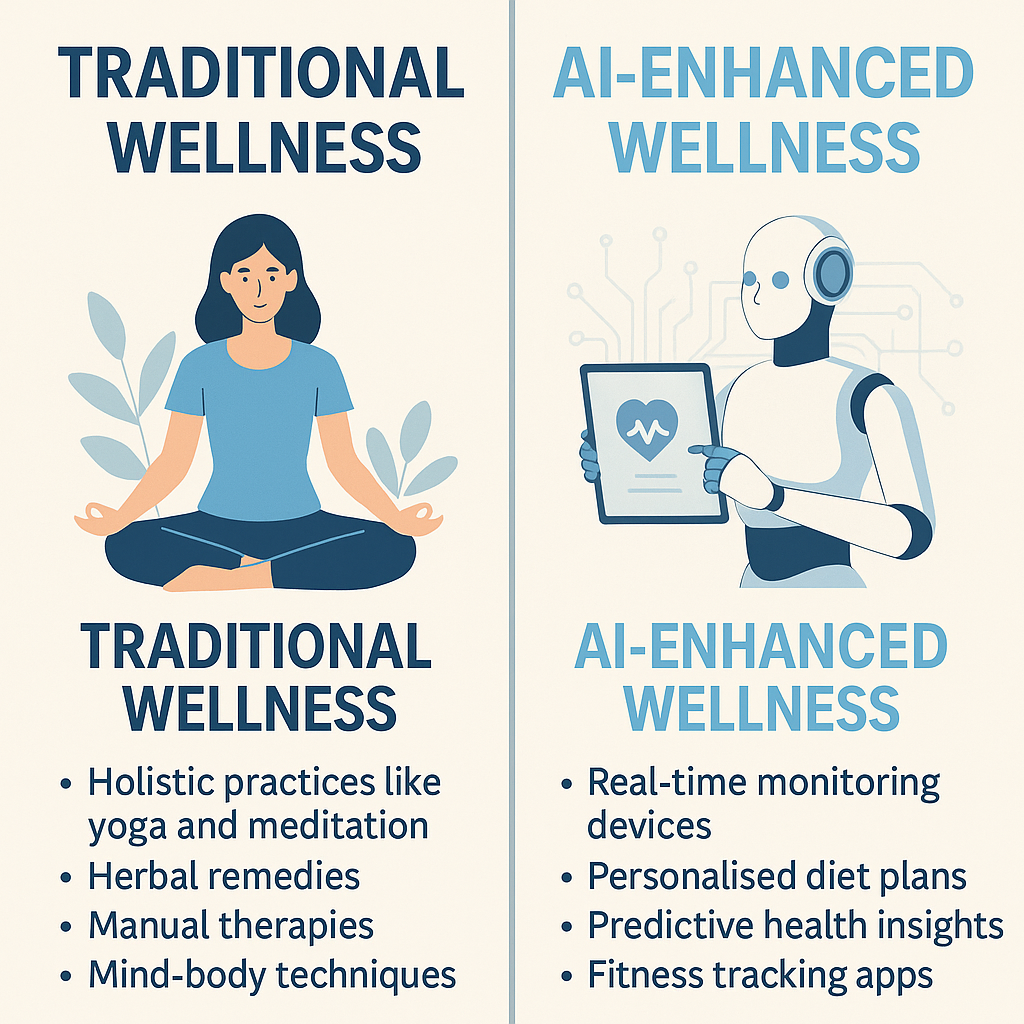
Traditional Wellness vs. AI Wellness

AI Wellness
#image_title

Why Compare Traditional and AI-Enhanced Wellness?

Wellness practices have evolved significantly over the decades. While traditional methods focus on holistic, often natural approaches, AI Wellness or AI-enhanced wellness utilises cutting-edge technology to personalise and optimise health. Comparing these methods helps us understand their benefits and challenges, guiding us towards making informed choices in our wellness journeys.


What Is Traditional Wellness?

Traditional wellness practices typically encompass holistic methods rooted in ancient cultures and practices. They include approaches like:

  • Yoga and Meditation: Enhancing mental and physical well-being through mindfulness and movement.
  • Herbal Remedies: Using natural plants and herbs to support health.
  • Acupuncture and Traditional Chinese Medicine (TCM): Balancing the body’s energy for improved wellness.
  • Manual Therapies: Including massage, chiropractic adjustments, and reflexology.
  • Mind-Body Techniques: Practices like tai chi and breathing exercises that foster relaxation.

The core philosophy of traditional wellness is balance—both within the body and between body and mind. These practices focus on natural healing, prevention, and lifestyle harmony.


What Is AI-Enhanced Wellness?

In contrast, AI-enhanced wellness harnesses technology to deliver personalised health solutions. Key aspects include:

  • Real-Time Monitoring: Wearable devices track heart rate, sleep patterns, and stress levels.
  • Personalised Diet Plans: AI analyses eating habits and provides tailored nutrition advice.
  • Fitness Tracking: Apps monitor exercise performance, suggest improvements, and set goals.
  • Predictive Health Insights: Algorithms analyse data to predict potential health issues before symptoms arise.
  • Smart Therapy Recommendations: AI-driven apps suggest mindfulness or stress management techniques based on real-time data.

The appeal of AI-enhanced wellness lies in its precision. By collecting and analysing data, AI offers insights that are specifically tailored to an individual’s lifestyle, health status, and goals.


Head-to-Head Comparison: Traditional vs. AI-Enhanced Wellness

AspectTraditional WellnessAI-Enhanced Wellness
PersonalisationCustomisation through holistic assessmentsUses real-time data for precision
AccessibilityRequires practitioners or in-person sessionsAccessible through apps and wearable devices
Data IntegrationLimited, often anecdotalComprehensive data tracking and analysis
EffectivenessProven in cultural contexts, results may varyScientifically driven, adaptable to personal metrics
Time CommitmentOften requires regular, long sessionsShort, efficient tracking with automated insights
CostCan be costly due to one-on-one sessionsVaries; many apps are affordable or subscription-based
Mental Well-beingFocus on mindfulness and holistic balanceMonitors mental health via data analysis and suggestions
Physical WellnessEmphasis on natural movement and balanceUses data-driven fitness insights for targeted improvements

Benefits of Traditional Wellness

  • Holistic Approach: Emphasises the interconnectedness of mind, body, and spirit.
  • Cultural and Historical Roots: Many practices are based on centuries of experience.
  • Accessible Without Technology: Suitable for those preferring a low-tech lifestyle.
  • Mindfulness-Centric: Encourages a slower, more reflective approach to health.

Benefits of AI-Enhanced Wellness

  • Precision and Customisation: Tailors advice to individual data.
  • Efficiency: Automates tracking and insights, saving time.
  • Advanced Monitoring: Detects subtle changes in health, allowing for proactive care.
  • Goal-Oriented: Sets measurable health targets and tracks progress.

Challenges to Consider

Traditional Wellness:

  • Lack of Data: Relying on anecdotal or experiential knowledge.
  • Inconsistency: Results can vary between individuals.
  • Limited Modern Validation: Some methods lack scientific evidence.

AI-Enhanced Wellness:

  • Data Privacy: Concerns over the safety of health data.
  • Dependency: Users may overly rely on tech for health decisions.
  • Lack of Human Touch: Some may find it impersonal compared to traditional methods.

Expert Insights

Dr. Mark Bennett, a wellness expert, notes, “Traditional methods remind us to listen to our bodies, while AI wellness adds scientific precision. A combination of both may offer the most balanced approach.”
On the other hand, tech specialist Lisa Tran suggests, “AI-enhanced wellness is practical for those with busy lives. It’s not about replacing tradition but augmenting it with data-driven insights.”


Finding the Right Balance

Both traditional and AI-enhanced wellness approaches offer unique advantages. Integrating elements from both may provide a more comprehensive approach to health. For instance, practising yoga while using a smart fitness tracker can combine mindfulness with precise physical data. Choosing methods that resonate personally ensures a sustainable and fulfilling wellness journey.


Final Thoughts

As technology continues to evolve, the intersection of traditional wellness and AI-enhanced practices will likely become more nuanced. By recognising the strengths of each, individuals can craft a wellness routine that supports their physical, mental, and emotional health. Whether you lean towards the wisdom of ancient practices or the innovation of modern tech, the goal remains the same—living a balanced, healthy life.

AI Powered Wellness

Science Behind AI Wellness Algorithms & Healthcare

AI Wellness Algorithms

Understanding AI Wellness Algorithms

In recent years, AI has become an essential tool in healthcare, shaping how we monitor, diagnose, and treat health conditions. At the heart of this revolution are AI wellness algorithms. These complex mathematical models process vast amounts of health data to deliver personalised insights and predictions. By analysing patterns, they can make accurate predictions about health risks, recommend preventive measures, and even assist in crafting tailored wellness plans.

How AI Algorithms Are Developed

Creating an AI wellness algorithm begins with data collection. Developers gather health data from diverse sources such as wearables, electronic health records (EHRs), and patient-reported outcomes. The data is then cleaned, organised, and fed into machine learning models. These models learn from the data by identifying patterns and correlations, allowing the algorithm to make predictions or recommendations. Over time, as more data is introduced, the model becomes increasingly accurate and reliable.

Types of AI Algorithms Used in Wellness

There are several types of algorithms commonly applied to health and wellness:

  • Supervised Learning: These algorithms are trained on labelled data, such as heart rate readings paired with activity levels, to predict health outcomes.
  • Unsupervised Learning: Used to detect anomalies or uncover hidden patterns in large, unlabelled health datasets.
  • Deep Learning: Utilises neural networks to process complex data, ideal for interpreting medical images or genomic sequences.
  • Reinforcement Learning: Algorithms learn by trial and error, commonly used in AI-driven fitness applications that adapt to user performance.
  • Natural Language Processing (NLP): Used to analyse patient feedback or medical notes, identifying symptoms or conditions.

How AI Algorithms Enhance Personalised Wellness

AI wellness algorithms excel at providing tailored health advice. For example:

  • Sleep Monitoring: Analyses sleep patterns to suggest routines that improve rest.
  • Fitness Tracking: Learns physical activity patterns to recommend workouts that match energy levels.
  • Mental Health Insights: Monitors mood variations and offers coping strategies when stress levels rise.
  • Chronic Disease Management: Predicts potential flare-ups in conditions like diabetes by tracking blood sugar trends.
  • Nutrition Guidance: Analyses dietary data to propose meal plans aligned with fitness goals.

Case Studies and Real-World Examples

One notable example is the AI wellness platform Ada Health, which uses machine learning to assess symptoms and suggest possible conditions. Another is Fitbit’s Health Metrics Dashboard, where AI algorithms analyse breathing rate, heart rate variability, and oxygen saturation to flag potential health issues.
Meanwhile, the Samsung Health Monitor uses AI to interpret ECG readings, helping users track their heart health in real time. These applications demonstrate how AI algorithms turn raw data into actionable insights.

The Role of Big Data and Predictive Analytics

Big data plays a crucial role in enhancing AI wellness algorithms. By integrating data from millions of users, algorithms can detect patterns that might go unnoticed in smaller datasets. Predictive analytics then comes into play, using these patterns to forecast potential health changes. For instance, AI-powered wellness apps can predict stress spikes based on past behavioural data and alert users to take preventive actions.

Challenges and Ethical Considerations

While AI wellness algorithms offer significant benefits, they also raise ethical questions. One key concern is data privacy. Since algorithms rely on personal health information, protecting user data is paramount. Furthermore, there’s the issue of algorithmic bias. If the training data lacks diversity, the predictions may not be accurate for all demographic groups. To address this, developers are working to create more inclusive datasets and implement robust data protection measures.

Expert Perspectives on AI Wellness

Dr. Emily Carter, a data scientist specialising in healthcare AI, highlights the importance of transparency. “AI wellness algorithms must be explainable. Users should understand how the algorithm arrived at a recommendation,” she notes. Additionally, Dr. Andrew Malik, a clinical researcher, emphasises that human oversight is essential. “While AI can flag potential issues, healthcare professionals must validate these insights before making clinical decisions.”

Future Implications of AI in Personal Wellness

As AI wellness algorithms continue to evolve, they are likely to become more integrated into daily life. Future developments may include:

  • Hyper-Personalisation: AI that adjusts wellness plans in real time based on continuous data input.
  • Advanced Mental Health Monitoring: Algorithms that detect subtle mood changes before symptoms escalate.
  • Comprehensive Health Ecosystems: Integration of fitness, sleep, diet, and mental health data into a single wellness profile.
  • Virtual Health Coaches: AI-driven advisors that provide ongoing guidance and motivation based on real-time insights.

Final Thoughts

AI wellness algorithms are reshaping how we manage health, offering a more personalised and data-driven approach. By continuously learning and adapting, these technologies make wellness more accessible and precise. As the science behind AI algorithms advances, we can expect even more sophisticated and reliable solutions that enhance our quality of life.

Watch the video – AI wellness algorithms

White Pages Hull

AI-Powered Home Chefs: The Smart Kitchen Revolution

AI-Powered Home Chefs

The Rise of AI-Powered Home Chefs

In 2025, the integration of artificial intelligence into home kitchens is transforming how people cook and eat. Gone are the days of laboriously following recipes or guessing ingredient quantities. With AI-powered home chefs, preparing gourmet meals is as simple as pressing a button. These smart kitchen devices utilise machine learning to adapt to personal tastes, dietary requirements, and even mood, making cooking not just more efficient but also more enjoyable.

What Are AI-Powered Home Chefs?

AI-powered home chefs are smart appliances and devices designed to assist with meal planning, preparation, and cooking. From voice-activated recipe guidance to fully automated cooking systems, these devices are redefining home cooking. Integrated with smart home ecosystems, they can monitor ingredients, suggest meals based on what’s in the fridge, and even order groceries when supplies are low. Whether it’s a smart oven that adjusts temperature automatically or a blender that tailors smoothie recipes to your nutritional needs, AI is making cooking smarter and simpler.

Key Features of AI-Powered Kitchens

The appeal of an AI-powered kitchen lies in its ability to reduce effort while enhancing meal quality. Some common features include:

  • Personalised Recipe Suggestions: AI systems analyse dietary preferences and nutritional needs to recommend meals.
  • Automated Cooking Programs: Smart ovens and multi-cookers can automatically adjust settings for perfect results.
  • Voice Control and Hands-Free Operation: Devices like Amazon Alexa and Google Home can guide you through recipes step by step.
  • Meal Planning Integration: Apps sync with your calendar to plan meals around your schedule.
  • Grocery Management: Track ingredients and suggest recipes to use up what you have before it expires.
  • AI Recipe Recommendations: Based on your cooking history and ingredient availability, the system suggests new dishes to try.

Popular AI Cooking Devices

Tech companies and appliance manufacturers are leading the way in AI cooking innovation:

  • Samsung Smart Oven: Uses AI to recognise food items and automatically set the cooking mode.
  • NVIDIA AI Chef: An AI-powered kitchen assistant that learns your cooking habits and suggests improvements.
  • CookAI by LG: A smart kitchen system that plans meals, monitors cooking, and even sets timers via voice command.
  • Suvie Kitchen Robot: Prepares meals from prepped ingredients stored in the appliance, ensuring perfect timing and temperature.
  • June Smart Oven: Uses camera recognition to identify food and suggest cooking times and temperatures.

How AI Chefs Enhance the Cooking Experience

Imagine arriving home to a freshly prepared meal because your AI chef knew you would be late and adjusted the cooking time. Or picture a busy morning where your smart coffee machine brews your favourite blend without you lifting a finger. These conveniences are becoming commonplace as AI-powered devices learn preferences and predict needs. Whether you’re looking to improve your culinary skills or simply save time, AI chefs are adaptable to your lifestyle.

Health Benefits of AI Cooking

Smart kitchens not only make cooking easier but also healthier. AI systems analyse ingredients for nutritional value and can suggest healthier alternatives or portion sizes. They also monitor calorie intake and provide guidance on balanced meal planning, making it easier to maintain a healthy diet without sacrificing taste. As more households adopt this technology, the focus on health-conscious cooking is likely to grow.

Challenges and Considerations

Despite the convenience, AI-powered kitchens come with challenges. Privacy concerns arise as devices collect data on eating habits. Additionally, not everyone is comfortable with machines making culinary choices. As manufacturers refine algorithms and enhance security, these concerns are being addressed. Users are encouraged to review data sharing policies and choose devices that offer robust security measures.

Future of AI in Home Cooking

The smart kitchen revolution is just beginning. As AI continues to evolve, future innovations may include fully autonomous kitchen robots that handle meal prep from start to finish. Moreover, as sustainability becomes a priority, AI systems will likely incorporate eco-friendly meal planning, reducing food waste by recommending recipes that utilise leftover ingredients. This forward-thinking approach aligns with the growing trend of sustainable living.

Final Thoughts

AI-powered home chefs are not just a novelty; they are practical solutions for modern living. By making meal preparation more efficient and tailored to individual preferences, these smart devices are enhancing everyday life. As the technology becomes more affordable, AI cooking tools will become staples in homes worldwide. Whether you’re a culinary novice or an experienced home cook, integrating AI into your kitchen could change how you prepare and enjoy food.

White Pages Hull

AI-Powered Home Chefs

Digital Twins for Personal Health: The Future of Personalised Wellness

Digital Twins

The Rise of Digital Twins in Personal Health

In 2025, the integration of digital twin technology into personal health management is transforming the way individuals monitor and maintain their wellbeing. Originally developed for industries like aerospace and manufacturing, digital twins are now being harnessed to create virtual replicas of human bodies. These digital models collect real-time data from wearable devices, health apps, and medical records to provide a comprehensive overview of an individual’s physical and mental health. The primary goal is to predict health changes, detect issues early, and offer tailored wellness advice.

What Are Digital Twins for Personal Health?

A digital twin in healthcare is a virtual representation of a person’s physical and biological state. By continuously receiving data from health monitoring devices—such as smartwatches, fitness trackers, or even implanted sensors—the digital twin evolves alongside the individual. This continuous flow of data enables healthcare providers to make data-driven decisions, offer precise treatments, and optimise long-term wellness. Digital twins essentially act as a digital health assistant, constantly evaluating vital signs, sleep patterns, physical activity, and more.

Applications of Digital Twins in Healthcare

Digital twins are proving to be revolutionary in various areas of personal health and wellness:

  • Personalised Health Monitoring: Individuals can track their physical condition in real-time, with AI-driven insights into sleep quality, stress levels, and daily physical activity.
  • Predictive Health Models: By analysing patterns, digital twins can predict potential health issues before they manifest, allowing for preventive measures.
  • Chronic Disease Management: For conditions like diabetes or hypertension, digital twins monitor critical metrics and send alerts when readings fall outside safe ranges.
  • Rehabilitation and Recovery: Patients recovering from surgery can use digital twins to track healing progress, guided by data from wearables that monitor movement and vital signs.
  • Mental Health Support: Mood tracking and stress analysis are incorporated into digital twins, helping to identify triggers and recommend relaxation techniques.

How Digital Twins Enhance Personalised Wellness

Unlike generic health advice, digital twins provide recommendations tailored to an individual’s unique biology and lifestyle. For instance, if someone’s digital twin detects irregular sleep patterns, it might suggest adjustments in routine, dietary changes, or sleep-enhancing exercises. Furthermore, the technology can integrate dietary preferences, fitness goals, and mental well-being metrics, creating a holistic health profile that adapts over time.

Data Privacy and Ethical Considerations

With the vast amount of personal data involved, privacy remains a significant concern. Digital twin platforms are designed with robust security measures, including encryption and secure data sharing. However, users must be vigilant about who has access to their health data. Many platforms are working towards offering users full control over their information, ensuring that data is only accessible to authorised healthcare providers.

Real-World Examples and Innovations

Several tech companies are pioneering this solution for personal health. For example, Philips has introduced a digital twin prototype that tracks cardiovascular health by analysing heart rate variability and blood pressure data from wearable devices. Similarly, Fitbit’s new wellness platform uses twins to predict stress levels based on activity and sleep data.

Why Digital Twins Are a Game-Changer

The potential of twins in personal health lies in their ability to offer real-time insights that evolve as the user’s health changes. Instead of reactive healthcare, which addresses problems after they occur, digital twins promote proactive and preventive care. As wearable technology and AI advance, twins will become more precise and accessible, revolutionising how we approach wellness.

Future Implications for Personal Health Management

As digital twin technology becomes mainstream, healthcare will increasingly focus on predictive and personalised care. Integrating data from multiple sources—including genetic profiles and environmental factors—will make twins even more accurate. Individuals will benefit from more informed healthcare decisions, leading to a longer, healthier life. Brands that invest in digital twin technology now will lead the future of personalised wellness, offering innovative solutions that align with the modern demand for health optimisation.

white pages hull