Why Compare Traditional and AI-Enhanced Wellness?
Wellness practices have evolved significantly over the decades. While traditional methods focus on holistic, often natural approaches, AI Wellness or AI-enhanced wellness utilises cutting-edge technology to personalise and optimise health. Comparing these methods helps us understand their benefits and challenges, guiding us towards making informed choices in our wellness journeys.
What Is Traditional Wellness?
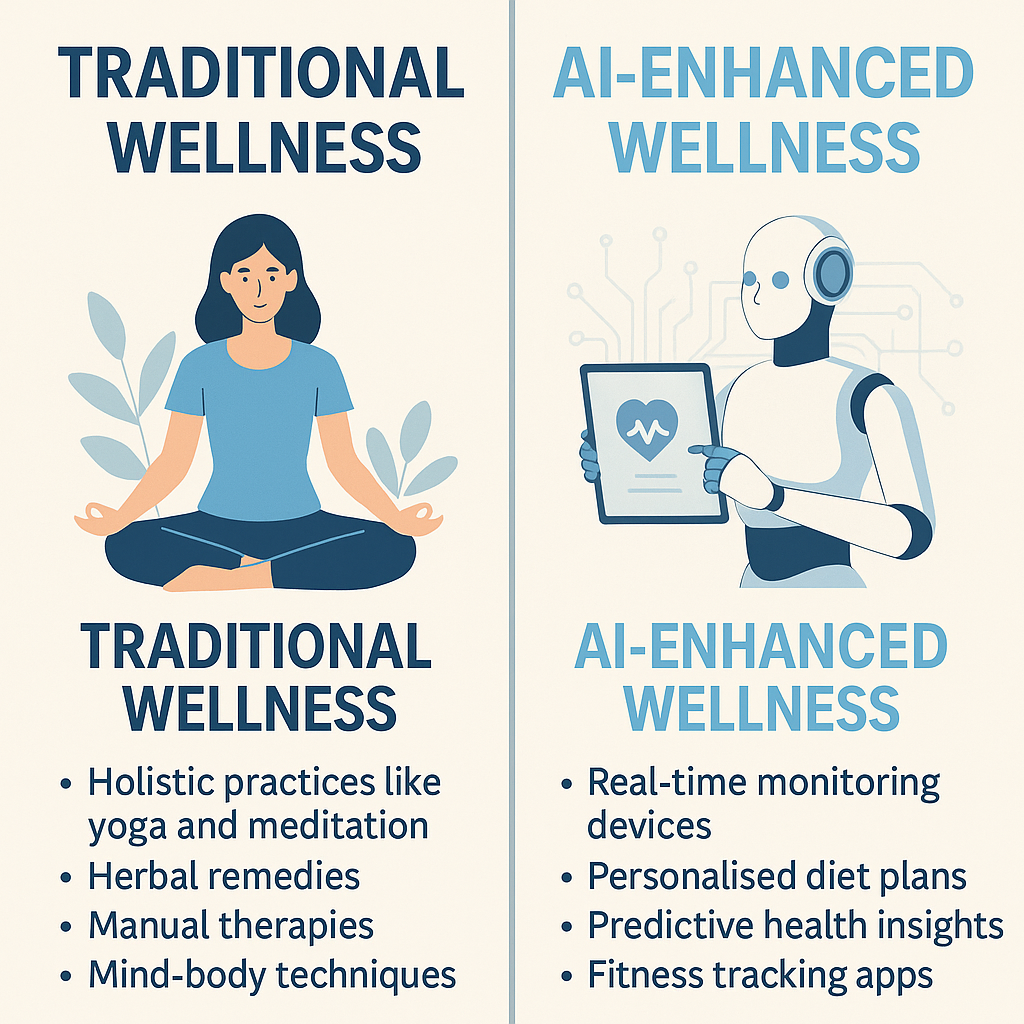
Traditional wellness practices typically encompass holistic methods rooted in ancient cultures and practices. They include approaches like:
- Yoga and Meditation: Enhancing mental and physical well-being through mindfulness and movement.
- Herbal Remedies: Using natural plants and herbs to support health.
- Acupuncture and Traditional Chinese Medicine (TCM): Balancing the body’s energy for improved wellness.
- Manual Therapies: Including massage, chiropractic adjustments, and reflexology.
- Mind-Body Techniques: Practices like tai chi and breathing exercises that foster relaxation.
The core philosophy of traditional wellness is balance—both within the body and between body and mind. These practices focus on natural healing, prevention, and lifestyle harmony.
What Is AI-Enhanced Wellness?
In contrast, AI-enhanced wellness harnesses technology to deliver personalised health solutions. Key aspects include:
- Real-Time Monitoring: Wearable devices track heart rate, sleep patterns, and stress levels.
- Personalised Diet Plans: AI analyses eating habits and provides tailored nutrition advice.
- Fitness Tracking: Apps monitor exercise performance, suggest improvements, and set goals.
- Predictive Health Insights: Algorithms analyse data to predict potential health issues before symptoms arise.
- Smart Therapy Recommendations: AI-driven apps suggest mindfulness or stress management techniques based on real-time data.
The appeal of AI-enhanced wellness lies in its precision. By collecting and analysing data, AI offers insights that are specifically tailored to an individual’s lifestyle, health status, and goals.
Head-to-Head Comparison: Traditional vs. AI-Enhanced Wellness
| Aspect | Traditional Wellness | AI-Enhanced Wellness |
|---|---|---|
| Personalisation | Customisation through holistic assessments | Uses real-time data for precision |
| Accessibility | Requires practitioners or in-person sessions | Accessible through apps and wearable devices |
| Data Integration | Limited, often anecdotal | Comprehensive data tracking and analysis |
| Effectiveness | Proven in cultural contexts, results may vary | Scientifically driven, adaptable to personal metrics |
| Time Commitment | Often requires regular, long sessions | Short, efficient tracking with automated insights |
| Cost | Can be costly due to one-on-one sessions | Varies; many apps are affordable or subscription-based |
| Mental Well-being | Focus on mindfulness and holistic balance | Monitors mental health via data analysis and suggestions |
| Physical Wellness | Emphasis on natural movement and balance | Uses data-driven fitness insights for targeted improvements |
Benefits of Traditional Wellness
- Holistic Approach: Emphasises the interconnectedness of mind, body, and spirit.
- Cultural and Historical Roots: Many practices are based on centuries of experience.
- Accessible Without Technology: Suitable for those preferring a low-tech lifestyle.
- Mindfulness-Centric: Encourages a slower, more reflective approach to health.
Benefits of AI-Enhanced Wellness
- Precision and Customisation: Tailors advice to individual data.
- Efficiency: Automates tracking and insights, saving time.
- Advanced Monitoring: Detects subtle changes in health, allowing for proactive care.
- Goal-Oriented: Sets measurable health targets and tracks progress.
Challenges to Consider
Traditional Wellness:
- Lack of Data: Relying on anecdotal or experiential knowledge.
- Inconsistency: Results can vary between individuals.
- Limited Modern Validation: Some methods lack scientific evidence.
AI-Enhanced Wellness:
- Data Privacy: Concerns over the safety of health data.
- Dependency: Users may overly rely on tech for health decisions.
- Lack of Human Touch: Some may find it impersonal compared to traditional methods.
Expert Insights
Dr. Mark Bennett, a wellness expert, notes, “Traditional methods remind us to listen to our bodies, while AI wellness adds scientific precision. A combination of both may offer the most balanced approach.”
On the other hand, tech specialist Lisa Tran suggests, “AI-enhanced wellness is practical for those with busy lives. It’s not about replacing tradition but augmenting it with data-driven insights.”
Finding the Right Balance
Both traditional and AI-enhanced wellness approaches offer unique advantages. Integrating elements from both may provide a more comprehensive approach to health. For instance, practising yoga while using a smart fitness tracker can combine mindfulness with precise physical data. Choosing methods that resonate personally ensures a sustainable and fulfilling wellness journey.
Final Thoughts
As technology continues to evolve, the intersection of traditional wellness and AI-enhanced practices will likely become more nuanced. By recognising the strengths of each, individuals can craft a wellness routine that supports their physical, mental, and emotional health. Whether you lean towards the wisdom of ancient practices or the innovation of modern tech, the goal remains the same—living a balanced, healthy life.