Tag Archives: Smart Fitness

AI Enhancing Your Fitness Journey

Discover how AI is transforming fitness, offering personalised workouts, motivation boosts, and realtime feedback for better exercise outcomes.
Have you ever wondered how artificial intelligence could revolutionise your fitness routine? With technology increasingly embedded in our daily lives, AI is now playing a pivotal role in transforming how we approach fitness and exercise.

The Rise of AI in Fitness

Artificial intelligence is rapidly becoming an integral part of fitness routines around the world. The combination of AI with fitness applications offers personalised experiences that cater to individual needs and goals. This trend is fuelled by the growing demand for efficiency and personalisation in workouts, as people seek ways to make their exercise routines more effective.

AIpowered fitness apps analyse data to create tailored workout plans, assessing user progress in real time. These applications often incorporate feedback loops that adjust exercises to better suit users’ evolving needs. The adaptability of AI ensures that users remain engaged and motivated, progressing toward their fitness goals effectively.

Personalised Workout Plans

One of the most significant advantages of AI in fitness is the ability to provide personalised workout plans. AI systems collect and analyse vast amounts of data from users, including workout history, heart rate, and even sleep patterns. This data is then used to create exercise regimens that are specifically tailored to the individual.

These customised plans are designed to increase efficiency and results, making each workout session as effective as possible. By adapting to personal strengths, weaknesses, and preferences, AI helps maintain a balanced and progressive fitness path. Users are therefore more likely to stick to their routines, seeing consistent improvements without the plateau effect that often comes with static workout plans.

Motivation and Engagement

Keeping motivated can be one of the most challenging aspects of maintaining a fitness routine. AI offers unique solutions to this problem by incorporating features such as virtual coaching and realtime feedback. These tools help maintain user engagement and motivation by providing encouragement and instant progress tracking.

Furthermore, AI can integrate gamification elements into workouts. By turning exercise into a fun and competitive game, users find themselves more driven to complete their sessions. The social connectivity these apps offer allows for friendly competition and peer motivation, which can be particularly effective for those who thrive in group settings.

RealTime Feedback and Adjustments

AI’s ability to provide realtime feedback is another gamechanger for fitness enthusiasts. Wearable gadgets that monitor physiological data like heart rate and calories burned offer insights that can instantly adjust workout intensity and type. This ensures each session is performed at optimal levels, reducing the risk of injury and maximising results.

Moreover, AI can guide users through exercises with precision, correcting form and technique through video analysis and motion tracking. This is particularly beneficial for beginners who may not have access to a personal trainer but want to ensure they are exercising correctly and safely.

The Future of AI in Fitness

The future of AI in fitness holds exciting possibilities. As technology continues to advance, AI will become even more adept at personalising and enhancing fitness experiences. We can anticipate more sophisticated integration with other health data, such as nutrition and mental wellness, offering a holistic approach to personal health and fitness.

Interconnected devices and smarter AI algorithms will provide an even broader spectrum of insights, helping users achieve their fitness goals more efficiently. The potential for AI to learn and evolve with users means that fitness solutions will continue to become more precise and supportive over time.

Top Tips:

Start by choosing an AIpowered app that aligns with your fitness goals.
Make use of realtime feedback to continually refine your workout technique.
Stay motivated by engaging with gamified elements and social features.
Regularly update your health data in the app for more accurate personalisation.
Take advantage of virtual coaching to overcome plateau phases in your regimen.

FAQ:

How does AI personalise my workouts?

AI analyses your health data such as age, weight, fitness level, and goals to tailor workout plans that are best suited to achieving desired results.

Can AI help avoid injuries?

Yes, AI offers realtime feedback and provides correct exercise forms and techniques, significantly reducing the risk of injury.

Is AI in fitness reliable?

AI is continually evolving, with most reputable apps updating regularly to enhance their accuracy and reliability.

What if I’m not techsavvy?

Many AI fitness apps are userfriendly, with intuitive designs aimed at making it easy for anyone to navigate.

Conclusion

AI is redefining the fitness landscape, offering tools and insights that make exercise more efficient and enjoyable. How will you integrate AI into your fitness journey? The possibilities are endless, and as technology advances, your workouts can only get smarter. Whether you are a seasoned athlete or someone just starting, AI can provide you with a personalised path to your fitness goals. Ready to start your journey? Explore the options available today and discover how AI can revolutionise your workout routine. Or, if you’re curious about other ways technology is shaping our lives, explore our people finder resources.

For more, see this Wikipedia article on Health.

AI Wellness Gadgets & Tech: Top Gadgets & Apps Personal Health

Wellness Gadgets
Wellness Gadgets

In today’s fast-paced world, staying healthy and maintaining well-being can feel overwhelming. Fortunately, wellness gadgets are changing the game. These innovative devices are designed to help us monitor, track, and improve various aspects of our health. From smart rings that analyse sleep patterns to AI-powered fitness platforms offering personalised workouts, wellness gadgets are making it easier than ever to stay on top of our physical and mental well-being. As technology continues to advance, integrating these gadgets into our daily routines is becoming the new norm.

1. Smart Rings: Compact Health Monitors

Oura Ring 4

  • Release Date: 15 October 2024
  • Price: Starting at £275; subscription at £4.99 per month
  • Features: The Oura Ring 4 offers advanced health tracking, including heart rate, sleep stages, and activity levels. It features a sleek titanium design, recessed sensors for comfort, and up to 8 days of battery life. The ring also provides women’s health features like cycle tracking and pregnancy insights.

Samsung Galaxy Ring

  • Release Date: 24 July 2024
  • Price: £315
  • Features: Tailored for Samsung users, this ring integrates seamlessly with the Samsung Health app. It includes sleep tracking, heart rate monitoring, and skin temperature sensing. No subscription is required, and it comes with a wireless charging case.

RingConn Gen 2 Air

  • Release Date: 21 March 2025
  • Price: £160
  • Features: This lightweight ring (weighing only 2.5g) offers AI-powered health insights, advanced sleep tracking, and up to 10 days of battery life. It’s an affordable option without sacrificing essential health monitoring features.

2. AI-Powered Fitness Platforms

CloudFit

  • Overview: CloudFit is an AI-driven wellbeing platform that delivers personalised health programmes and coaching for physical, mental, and nutritional health. It offers a free tier, making it accessible for individuals and small gyms.

AdaptAI

  • Overview: Launched in 2025, AdaptAI is an AI-powered fitness and wellness platform offering tailored workout plans based on biometric data. It uses real-time feedback to adjust routines, helping users optimise their physical and mental wellbeing.

3. Mental Health Support Apps

EmoBay

  • Overview: EmoBay is an AI-powered mental health platform offering 24/7 conversational support, mood tracking, and crisis-response guidance through a chatbot interface. It provides accessible, stigma-free support anytime, anywhere.
  • Subscription: Free basic version; premium features from £15 per month.

Wysa

  • Overview: Wysa is an AI-driven mental health app that provides users with an AI coach for confidential conversations, self-help tools, and coping techniques.
  • Subscription: Free version available; premium starts at £16 per month.

Youper

  • Overview: Youper is an AI-powered emotional health assistant that guides users through science-backed conversations and exercises to reduce stress and improve mood.
  • Subscription: Free 7-day trial, then £55 per year.

4. Smart Home Wellness Gadgets

Withings Omnia Smart Mirror

  • Release Date: 8 January 2025
  • Price: £899
  • Features: The Withings Omnia is an AI-enabled smart mirror that provides a comprehensive health overview by measuring weight, metabolic health, and heart health. It integrates data from other trackers and offers real-time feedback through a built-in AI voice assistant.

Ozlo Sleepbuds

  • Release Date: 30 September 2024
  • Price: £240
  • Features: Designed by former Bose engineers, Ozlo Sleepbuds offer passive noise cancellation and soothing audio to improve sleep quality. They are designed for comfort, especially for side sleepers, and provide up to 10 hours of Bluetooth streaming.

5. AI-Enhanced Nutrition Tracking

DietGlance

  • Overview: DietGlance automatically monitors dietary intake using multimodal inputs, including wearable tech and AI-driven analysis. It delivers personalised nutritional advice, helping users make informed dietary choices.
  • Price: Free basic version; premium subscription at £9.99 per month.

Cal AI

  • Overview: Cal AI is a calorie tracker app that allows users to take pictures of their food, providing estimates of calorie and macronutrient content.
  • Subscription: Free version; premium at £4 per month.

Wellness Gadgets – Why AI Wellness Tech Matters

The convergence of AI and wellness in 2025 is leading to innovative tools that empower individuals to take control of their health. From wearable devices to intelligent apps, these advancements offer personalised insights and support, making wellness more accessible and tailored than ever before. As more people integrate AI health gadgets into their daily routines, the potential for improved well-being grows significantly.

AI-POWERED PERSONALISED WELLNESS

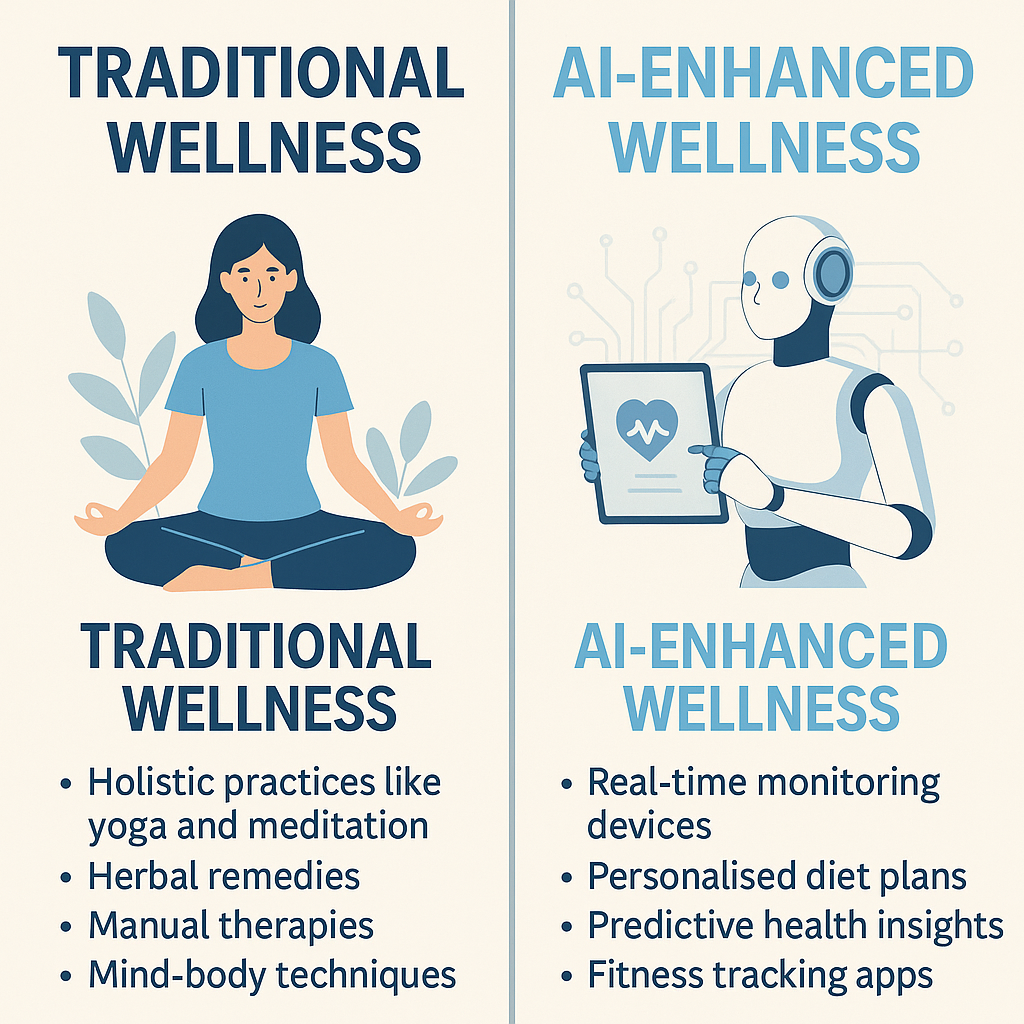
Traditional Wellness vs. AI Wellness

AI Wellness
#image_title

Why Compare Traditional and AI-Enhanced Wellness?

Wellness practices have evolved significantly over the decades. While traditional methods focus on holistic, often natural approaches, AI Wellness or AI-enhanced wellness utilises cutting-edge technology to personalise and optimise health. Comparing these methods helps us understand their benefits and challenges, guiding us towards making informed choices in our wellness journeys.


What Is Traditional Wellness?

Traditional wellness practices typically encompass holistic methods rooted in ancient cultures and practices. They include approaches like:

  • Yoga and Meditation: Enhancing mental and physical well-being through mindfulness and movement.
  • Herbal Remedies: Using natural plants and herbs to support health.
  • Acupuncture and Traditional Chinese Medicine (TCM): Balancing the body’s energy for improved wellness.
  • Manual Therapies: Including massage, chiropractic adjustments, and reflexology.
  • Mind-Body Techniques: Practices like tai chi and breathing exercises that foster relaxation.

The core philosophy of traditional wellness is balance—both within the body and between body and mind. These practices focus on natural healing, prevention, and lifestyle harmony.


What Is AI-Enhanced Wellness?

In contrast, AI-enhanced wellness harnesses technology to deliver personalised health solutions. Key aspects include:

  • Real-Time Monitoring: Wearable devices track heart rate, sleep patterns, and stress levels.
  • Personalised Diet Plans: AI analyses eating habits and provides tailored nutrition advice.
  • Fitness Tracking: Apps monitor exercise performance, suggest improvements, and set goals.
  • Predictive Health Insights: Algorithms analyse data to predict potential health issues before symptoms arise.
  • Smart Therapy Recommendations: AI-driven apps suggest mindfulness or stress management techniques based on real-time data.

The appeal of AI-enhanced wellness lies in its precision. By collecting and analysing data, AI offers insights that are specifically tailored to an individual’s lifestyle, health status, and goals.


Head-to-Head Comparison: Traditional vs. AI-Enhanced Wellness

AspectTraditional WellnessAI-Enhanced Wellness
PersonalisationCustomisation through holistic assessmentsUses real-time data for precision
AccessibilityRequires practitioners or in-person sessionsAccessible through apps and wearable devices
Data IntegrationLimited, often anecdotalComprehensive data tracking and analysis
EffectivenessProven in cultural contexts, results may varyScientifically driven, adaptable to personal metrics
Time CommitmentOften requires regular, long sessionsShort, efficient tracking with automated insights
CostCan be costly due to one-on-one sessionsVaries; many apps are affordable or subscription-based
Mental Well-beingFocus on mindfulness and holistic balanceMonitors mental health via data analysis and suggestions
Physical WellnessEmphasis on natural movement and balanceUses data-driven fitness insights for targeted improvements

Benefits of Traditional Wellness

  • Holistic Approach: Emphasises the interconnectedness of mind, body, and spirit.
  • Cultural and Historical Roots: Many practices are based on centuries of experience.
  • Accessible Without Technology: Suitable for those preferring a low-tech lifestyle.
  • Mindfulness-Centric: Encourages a slower, more reflective approach to health.

Benefits of AI-Enhanced Wellness

  • Precision and Customisation: Tailors advice to individual data.
  • Efficiency: Automates tracking and insights, saving time.
  • Advanced Monitoring: Detects subtle changes in health, allowing for proactive care.
  • Goal-Oriented: Sets measurable health targets and tracks progress.

Challenges to Consider

Traditional Wellness:

  • Lack of Data: Relying on anecdotal or experiential knowledge.
  • Inconsistency: Results can vary between individuals.
  • Limited Modern Validation: Some methods lack scientific evidence.

AI-Enhanced Wellness:

  • Data Privacy: Concerns over the safety of health data.
  • Dependency: Users may overly rely on tech for health decisions.
  • Lack of Human Touch: Some may find it impersonal compared to traditional methods.

Expert Insights

Dr. Mark Bennett, a wellness expert, notes, “Traditional methods remind us to listen to our bodies, while AI wellness adds scientific precision. A combination of both may offer the most balanced approach.”
On the other hand, tech specialist Lisa Tran suggests, “AI-enhanced wellness is practical for those with busy lives. It’s not about replacing tradition but augmenting it with data-driven insights.”


Finding the Right Balance

Both traditional and AI-enhanced wellness approaches offer unique advantages. Integrating elements from both may provide a more comprehensive approach to health. For instance, practising yoga while using a smart fitness tracker can combine mindfulness with precise physical data. Choosing methods that resonate personally ensures a sustainable and fulfilling wellness journey.


Final Thoughts

As technology continues to evolve, the intersection of traditional wellness and AI-enhanced practices will likely become more nuanced. By recognising the strengths of each, individuals can craft a wellness routine that supports their physical, mental, and emotional health. Whether you lean towards the wisdom of ancient practices or the innovation of modern tech, the goal remains the same—living a balanced, healthy life.

AI Powered Wellness